Tuesday, June 9, 2015

Chairs

While mentoring young writers, I often come across similar issues.  One of my favorites is when the writer in question has a brilliant imagination, but clearly hasn't thought things through enough.  I teach a module called "Evolution of the Species" in which we discuss this type of issue, but here' i'd like to focus on a small problem that turned huge pretty quick as an illustration. 

For the purposes of this exercise, let's assume you're a writer.  

Your genre is fantasy (or "high fantasy").  You've created a race of people who have wings.  You have a gift of description that leaves your readers breathless with the beautiful images of purple feathers and soft collars of down.  In fact, this race is so ancient that you have no real reason to create a complete backstory for them because they "have always been."

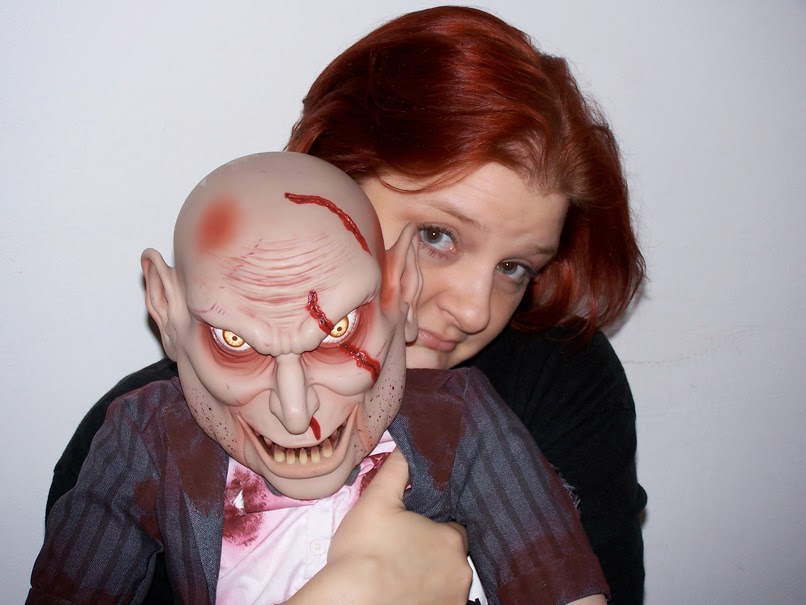
Submitted without comment...


Then one sits in a chair. 

Now, for a moment, lets ignore all the other issues this world has, such as your winged people living in houses.  Let's just focus on that one detail for a moment. 

In your home, you have chairs.  No, really.  Don't believe me?  Go look.  I'll wait.  See?  Told you.  Now, in your description of these chairs, you go on and on about highly decorated ornate backs of wood and employ your gift of descriptive imagery to its full extent.  The chairs in your world are beautiful and realistic to all the readers.  

Pictured:  Your character's chair.


They're also wrong.  Here's why. 

Follow my thought process here.  Intelligent species first begin designing object to use out of utilitarian need.  We design things that fit our bodies, and if it doesn't, then why on any world would we create them?  Do you see the problem yet?  Okay... Here it is:  If your character, which you describe as the size of a roughly good sized human, has wings large enough to bear him aloft in accordance with the laws of physics, he could not physically sit in a chair because he would break his wings.

"Dammit!  This is why we can't have nice things!"
The same thing applies to every aspect of this new world in which the dominant species has a twelve-foot wing span.  So now it becomes your job as a writer to build your world backward, so you can see what would've been built how, and why.  A species with a twelve-foot wing span would not, for example ever build anything that would necessitate the crushing of one's own wings.  In fact, if you take into account physical limitations, this particular species would, likely, have invented the bar stool long before it ever invented something as obviously meant for torture as a "chair."

See?  No backs, no wing crushings.
Now apply this to other areas.  For example, a "bedroom."  What's the first thing you like to do when you wake up in the morning?  Stretch, right?  Now take a good look at your bedroom.  Hard walls, low ceilings, etc.  If you had a twelve-foot wingspan, would you ever be caught inside something like that?  Chances are, no.  Chances are, it would be torturous for you.  Small windows, roads, vehicles... None of it would even exist in a world where the dominant species had wings.  Hell, roads might not even exist. 

The point is this:  You need to think it through.  Build your world from the bottom up with the dominant species in mind.  There's a brilliant joke that the late great Douglas Adams wrote in The Hitchiker's Guide to the Galaxy which involves a multi-limbed creature that was unique in the universe in that it invented underarm deodorant before it discovered the wheel.  Necessity.  It's why we create things.  Your species would do the same. 

When you build a world, start with your species.  Then ask yourself a series of questions:
  • What are its needs?
  • What are its limitations?
  • How are they like me?
  • How are they dissimilar?
Make good choices for your characters and make your world more believable.  I don't mean make your readers think the world is real, but at least make them wonder at the possibility.  Otherwise, you have creatures who are doing incredibly uncomfortable things for their anatomy.  Like sitting in chairs. 

Monday, December 15, 2014

Development

One of the most difficult things writers have to contend with is the subject of plot development.  I mean, sure, we all have a story or two to tell, but it's not the process of getting from point A to point B that's important.  We're trying to get our characters from point A to point Z, and our plot points are points B through Y.  We are trying to develop our characters and plots so they will be more interesting because, honestly, we want the reader to care about them.  Love 'em, hate 'em, feel something goddamn it.  The worst possible thing that a reader can do is not care whatsoever.  Without some kind of emotional involvement, the reader has no reason to turn the page.

Let's take a look at the great theatrical spectacle that was 1980's-era pro wrestling.  Yes, I'm going to reference pro wrestling.  You got a problem with that?

Pictured:  My "You got a problem with that" face.
The two most popular characters in pro wrestling in the 80's were Hulk Hogan and "Rowdy" Roddy Piper.  Hogan was a largely static character with over-the-top cartoonish proclamations to eat your vitamins, say your prayers, and exercise.  Piper was a kilt-wearing maniac with a fast mouth and a talent for causing trouble, and was one of the toughest sons-of-bitches on the planet.  His words, not mine.  For the record, here they are:

Guess which one was my hero...
Hogan was most often billed as unstoppable.  His routine went something like this:  Get to the ring, get beat down, "hulk up" (which involved shaking and quaking like he was trying to force a large piece of cheese out of his butt), then he'd point as his opponent and yell "YOU!"  Then came his own beat down.  Clothesline, big boot, leg drop, 1-2-3, and everyone celebrates.  It got old.  Really old, really fast.

Piper, on the other hand, was quite different.  You really weren't sure which "Roddy Piper" was coming to the ring.  The mouth?  The fighter?  The lunatic?  Piper kept the audience guessing.  Sure, his favorite finisher was the sleeper hold (which, for MMA fans, is a rear-naked choke), but he didn't always use it.  It was always a guess whether he'd finish his opponent off with that, stomp him into the matt, get himself purposefully disqualified, or any other of a thousand little things that my main man RRP thought of.  And before long a question arose.  Who was the biggest star?  It could be argued that people came to see Hogan win.  But I'm of the opinion that people were actually there to watch Piper lose. Piper did such a good job of making people hate him, he was actually stabbed by audience members.  Three times.  Think about that for a moment.  It's pro-freaking-wrestling for crying out loud!  And yet, RRP really got the people going.

Pictured:  Raleigh, North Carolina, pro wrestling crowd...

Then, an interesting thing happened.  Piper's character developed and Hogan's character didn't, and people started booing Hogan.  The great, the immortal Hulk Hogan, was getting boos from the crowd.  And who got cheered?  Rowdy Roddy Piper.  The difference?  Character development.  Plot development.  Let me explain.  Hogan's character never grew.  He was Superman without kryptonite: Boring.  But Piper took up causes.  His character developed from a crazy person to a person who let us see what was driving him crazy.  He became the original anti-hero (sorry, Stone Cold Steve Austin, but my man Piper beat you to it).  And in doing so, showed the importance of plot and character development.

As a kid, I watched so much pro wrestling that I wanted to be one of them.  But when I was growing up, it was the age of the "big men," and there was no place for a 5'6" guy in the world of pro wrestling.  So I kept watching.  One of my most beloved moments came when Roddy Piper came out before a crowd who screamed his name.  He took the microphone and said, obviously taken aback, "I'm not used to so many people cheering for me.  And I want to make it clear, I ain't running for president, and I'm still the same no-good sonovabitch I always been."  The crowd went insane with love.

So you see, Timmy...
At his core, Rowdy Roddy Piper was the same guy.  But his journey to get from point A to point Z had many twists and turns and made the audience care about him.  They cared enough to stab him.  They cared enough to scream when he came back.  They cared enough that they can't get enough of him.  And that's what you want for your characters.

Every character should be a different person at the end of the story.  Think about it.  You woke up this morning and had things happen.  At least, I hope you did.  And those events of the day made you react.  Even if it was a small thing, you've changed just a little today.  It's easier to see if you look at development over long periods of time.  Think about what you were like as a freshman in high school and try not to cringe.  Your characters need to have similar developments.  What affects your characters?  Pretty much everything. People they interact with, situations that call for decision making, death, birth, car trouble, rain... Everything.  The little changes are what make the character interesting.  The way he makes decisions, and what decisions he makes, bring the reader closer to him.

Pictured:  Stasis Chambers...

Stasis is boring.  There's no room for growth.  Your characters cannot stay in stasis if you expect for people to care about them.  Read any series of books and you'll watch the lead character grow through loss, love, gain, injury, personal epiphany, etc.  Your characters need to do the same.  If your lead character is exactly the same at the end of the novel as he was at the beginning, you're doing something wrong.

Just my $.02...


Thursday, December 4, 2014

Advice for the One's

It's that time again.  Time for the newbs to descend on Seton Hill University and leap into the Masters in Writing Popular Fiction program.  As I've been teaching in the program for many years (almost since the beginning), I feel like I have the responsibility (and possibly the right) to throw a little advice around.  I speak only for myself as a mentor, not for everyone else in the program, but here are a few tidbits that I feel everyone needs to know.

  • Be Nice to Everyone - You don't know who you're talking to.  Let me say that again.  You don't know who you're talking to.  The person in your crit circle might have a day-job working as an acquisitions editor, or a critic, or might already be an author with more than 30 books under his or her belt.  Hell, one of them might be married to a major Hollywood producer (she knows who I'm talking about).  The writing community is notoriously small, and we have wickedly long memories.  
  • Check the Ego at the Door - When you show up, you may have a lot of notions about being a stand-out, or how good your work is, or a thousand other things.  Criticism is coming, and it won't always be gentle.  Here's the deal:  You're not as good as you think you are.  The good news is, you're also not as bad as you think you are.  You're here to learn.  Your mistakes as well as the mistakes of others will teach you loads, but you need to be open to criticism and realize the fundamental truth:  Nothing said in crit is meant to be taken personally.  Everything said in crit, and everything said by your mentor, is said for the sole purpose of making you better.  If you have trouble listening to what works, what doesn't, where your strengths and weaknesses are, and how to improve, you won't grow as a writer.  Which begs the question:  if you're in this program, but can't take criticism, what are you doing in the program?
  • Grammar, Spelling, Punctuation - As you are coming into a Masters program in English, it seems kind of like a no-brainer that you should have a grasp of mechanics.  Having said that, I realize that not everyone has the extensive background in English, and a large (and growing) group actually don't come from an English background.  That's fine and dandy, but it's now up to you to play catch-up.  This is an incredibly competitive path, and you want to be able to put your best foot forward. To wit, our jobs in the program are to help you have the best possible chance of getting your thesis published.  Agents, editors, publishers, etc. all get hundreds, if not more, manuscripts in their mailboxes every day.  To get through the monumental amount of mail, they have to look for any reason whatsoever to toss your manuscript in the trash.  Comma splice?  Gone.  Run-ons and fragments used improperly?  See ya.  And what we, as mentors, need to focus on  are issues like characterization, plot structure, world-building, and other things that you need to know if you're going to be a writer.  Making your mentor line-edit your manuscripts is just rude. Take the initiative and work on your mechanics so that you and your mentor and critique partners can focus on shaping your story. 
  • The Mentors Aren't Gods  - I know how a lot of us come across.  I, for one, can come across as a grade-A jackass over e-mail.  Many of us come across as egomaniacal monsters that get our jollies off of destroying the hopes and dreams of students.  Nothing could be further from the truth.  The fact is, if you take the time to get to know us, you'll realize that we're not.  We're passionate about writing.  We're passionate about our genres, and we're passionate about helping you become better writers.  Most of the time, critiques tend to focus on what's wrong with a manuscript, or on what doesn't work, and that can lead to the feeling that the mentor hates the student or can create animosity.  For the most part, the truth is that we focus on what needs improvement, and thats because we want you to succeed.  Read that last part again:  We want you to succeed.  So look at what we're trying to tell you, and realize that nothing said is a personal attack.  It's all done to point out weaknesses for you to repair. 
  • Avoid the Dining Hall - Seriously.  It's awful.  Taco Bell is right by the hotels. 
  • Socialize with EVERYONE - Don't segregate yourself by your class.  One's, go grab yourself a couple of fives (not literally... They're skittish), some fours, a three and a two, and talk to them.  Have a drink with them.  If you happen to see a mentor or two at the social, chat 'em up!   It really does make your life easier. 
  • Be Prepared - Read the assignments, crit pieces, etc. before the crit session.  You want your classmates to be respectful of your work, so be respectful of theirs too.  
  • Your Time - This is likely the only time many of you will have in which you get this kind of feedback.  This is likely the only time many of you will have for such honesty, such hard work, and so many people who only want you to succeed.  You will be able to talk to agents, editors, authors and publishers.  Do you realize how rare that is?  Take advantage of your time here.  Make the best out of it.  
  • Greensburg - Is a maze.  You will get lost.  Deal with it.  Half the fun of being at residency is trying new things and trying to figure out where the hell you are.  
  • Wendy Lynn - Do not piss this woman off.  She is royalty in the program, and usually is the one who knows what's really going on.  

Thursday, August 14, 2014

It's Been a Year...

…since you died.

One year ago, cancer claimed my first true love. For two years prior to that, I held your hand while I watched poison drip into your body to try to fight it. I shaved my head so we would match and you wouldn't feel so alone. I watched as you dropped down to weights that no adult human should ever be. I changed your diapers, held you in the shower, put you to bed and sang to you. Because that's what husbands are supposed to do, right? Love and honor, in sickness and in health, till death do us part? And then you died.

A year has passed. I tried to learn from your guidance to raise our daughters. Our youngest enters high school this year. Our oldest is still trying to find her way. I keep the house clean, that should please you. I cook now. Not like you used to, but I've learned a few of your recipes that make us feel like maybe you're still around. I got a new kitten too. I ride my Harley with your pendant as a keychain so that you are always with me, watching over me when I ride.

And still, I miss you.

I met a woman. You would like her. She's bright, and pretty, and creative and artistic. Our daughters like her. They love her. Not like you, of course, and she realizes that no one will ever replace you. But she loves me. She makes me feel like that part of me that died when you did might not be dead after all.

When you died, I wanted to die to be with you, but didn't for the sake of our children. Now, I build on the lessons you taught me to be a better father. And I still catch myself crying over the simplest things… Vanilla ice cream (your favorite), Saran-Wrap press & seal (which you used often), the scent of pomegranates, and certain areas of town. I'm crying now. And when I do, she comforts me.

I'll never forget you. I was married to you for twenty years. Your parents said we were too young to get married, but I stayed until the end. And I cried. And I still cry. And I loved you. And I still love you.

Thursday, May 29, 2014

On Triggers and Bravery

There's been a trend recently of authors putting "trigger warnings" in their work.  "This work contains subject matter that may cause feelings of…" That sort of thing. So I figured I'd take a few moments and post my thoughts on bravery and triggers, and the difference between being brave and pandering.

So… Art imitates life.  We draw our best inspiration from the world around us and we write from our human condition.  And in that condition, things happen.  It's not a pretty world out there sometimes.  Rape, murder, discrimination, kidnapping, mutilation, molestation… The list goes on and on of the atrocities that man visits upon his fellow man (and by "man" in this case I mean all of human existence).  And these atrocities are, more often than not, ripe for the picking of someone like me who is trying to tell a story.  I mean, who wants to read a story about a person to whom nothing happens?  No one, that's who.  Why?  Because it's boring.  And so we mine our own experience and we write about things happening to our characters because it makes the story interesting.  It makes the story powerful.
Pictured:  Life Imitating Art


A writer's job is to tell a story, but also to create an emotional connection with the reader.  We want to make the reader feel what we want them to feel.  Love.  Hate.  Fear.  Dread.  We want to twist those little knobs in the brain and make you care about our characters and what happens to them.  Which, to at least one train of thought, means that using trigger incidents is a dirty trick, kind of like cheating.  And to another train of thought, it's perhaps the bravest thing a writer can do. Follow me on this…

For many of us, our work stands as allegories of our own experiences (Stephen King's treatment of alcoholism in The Shining immediately leaps to mind).  Which, often times, means that emotional connection we make is between the reader and something akin to a raw nerve for us.  When the person who inspired a certain character passed away, so did her character, and I relived that heartache and sense of loss all over again so that I could build that emotional connection and make you feel what I felt.  I want to share my feelings with the reader because, in that sense, I am not alone in that someone else feels it too.  From the reader's perspective, he is not alone because he understands that emotion, and now ties him to the story.  We all do it.  We all use the little experiences we've had and we write about them in cathartic release so that our souls are no longer burdened with them, so our hearts no longer feel alone because we've put them out there and inflicted them upon the world.
Pictured:  Reader


So… Then there are triggers.

When we make a connection so strong that it goes beyond "I understand" and moves to "holyshiticanfeelpanicandihavetobemedicatedandmyptsdiscomingback…" you might think the goal has reached its ultimate conclusion.  We created an emotional connection so strong, it sent the reader into therapy.  But that's not really the point.  I jokingly say we "inflicted" our memories on the world, but what we're really doing is trying to make people understand.  We're trying to create some perspective.  And for many of us, that means offering ourselves up as sacrificial lambs and laying our souls naked on a cutting board. We are vulnerable.  We offer ourselves up to you, the reader.
Pictured:  The Metaphor of the Writer's Soul

Of course, that's not true of all of us.  Just because I've never experienced what it means to be raped doesn't mean I can't write an effective rape scene.  But, for me at least, I will go and talk to victims and try to get them to open up about their feelings so I can accurately portray them on paper.  And, by proxy, I am leaving them bare on the cutting board in hopes that I can make someone else understand what they've been through.

But what exactly are we doing?  Do we actually want to alienate our readers?  Do we want them twitching in the corner, or having a panic attack over something we've written?  Most of us are very good at writing emotional scenes, and put things that pluck at the heart and emotions in every line we write.  But do we brutally assault the reader with them for the sake of making a sale?  Do we have the right to play God that way?
Pictured:  Playing God


To me, the difference is intent.  If you use triggers specifically because it will be shocking, well, there's a market for it, but that doesn't make it good.  If you use those events to develop the story, the characters, to try to make the reader understand what that was like… That, to me, is what makes a book literature.  To me, that's the goal.

Tuesday, May 20, 2014

Taking a Day Off...

I'm one of those who is pretty much constantly talking about the "discipline" of writing.  Set a daily goal, meet it come hell or high water.  Set a routine and work work work.  And yet, there are days that, no matter how disciplined you are, the words just won't come.  So what do you do?  For many of us, we'll either work on another project (assuming we have one) or we'll stare intently at the blank page as the cursor blinks and mocks us with its happy little line.  Sometimes, we just begin writing, stream of consciousness, secure in the knowledge that, even if the thousand words we write today are crap, we can always go back and rewrite them, and tomorrow, that nasty case of writer's block will be gone.  The truth, however, is that many of us stare at the keyboard and slip slowly into madness as we blame everything in the world for our inability to form words.
Pictured:  Madness Personified

And that is the point of this week's essay.  Sometimes, you just have to take the day off.

Look, I get it.  You're serious about your craft.  This "writing" thing isn't a hobby… it's a career.  And you are dedicated.  Committed even.  However, like any job, if you become too serious about it, you will be.  Committed, I mean.  No, I'm not condoning slacking off.  And I'm not saying that this isn't a serious endeavor.  But what I am saying is that, even for the greatest writers in history, sometimes the words just don't come. 
Pictured:  Words!  Where are the words?
The tendency that we all lean toward is to barricade ourselves in our little caves lit only by the pale glow of our computer monitors and shun all life until something breaks in our brains to get the words out.  Hours may pass, or even days in which we eschew all rules of personal hygiene and social convention fearing that, should we leave our seat, the muse will alight and, finding us absent, depart without leaving so much as a piece of muse-shit on our chair.  We tell ourselves that we are dedicated.  We are artists.  We are writers.  And there's another word for that.

Hermits. 

Pictured: Harold, the Hermit
You cannot force creativity.  You cannot force creativity.  You can develop all the tools you need to create the greatest book in the world, and still, some days, the words just won't come.  So what do you do?  Instead of sitting around and beating yourself up over it, you need first to forgive yourself. It happens to everyone.  Just like locking the keys in your car or moments where you just feel blah, it happens to everyone.  And it's nothing to blame yourself for.  It's nothing for which you should beat yourself up.  It happens.  The next thing you need to do is push the chair away from the keyboard, stand up and (Gods help you) go outside into the (cursed) sunlight.

Pictured:  Writer exposed to direct sunlight

Go out on a date.  See a movie.  Get a drink.  Go for a jog.  For pity's sake, go interact with people.  And whatever you do, do not talk about your work.  There is nothing writers like to do more than talk about their work.  In fact, many writers like talking about it so much, they rarely ever get down to actually doing it.  But for one evening, you're not a writer.  For one evening, you are going out masquerading as a "normal" person.  For one evening, you need to get out and actually enjoy life.  And then you'll notice a funny thing… When you get back, your writer's block will be gone.  It's true.  Because when you let go of that vice-like grip on your imagination, it relaxes and is allowed to flow again. 
Pictured:  FREEDOM!!!
Just remember:  don't make a habit of it.  Take your one night off, enjoy that burlesque show you've been hearing about.  Go home, get some sleep, and allow yourself to indulge for one night.  Feel that?  That weird thing that your face is doing?  That's called "smiling."  Then, the next day, plant your butt in your chair, and get back to work.  It was just a mini vacation, after all.